Ohana (flower fees) billing system
Memoirs of a GeishaThe Ohana (flower fees) billing system was Gion’s time-based method for charging for a geisha’s attendance at a party. It converted the duration of an engagement into a fee measured in ohana, or “flowers,” and made differences in popularity visible in both earnings and access to work. Its billing conventions also created an opportunity for a popular older sister to inflate an apprentice’s apparent success, though exploiting that opportunity could damage their reputations.
How the Fee Was Measured
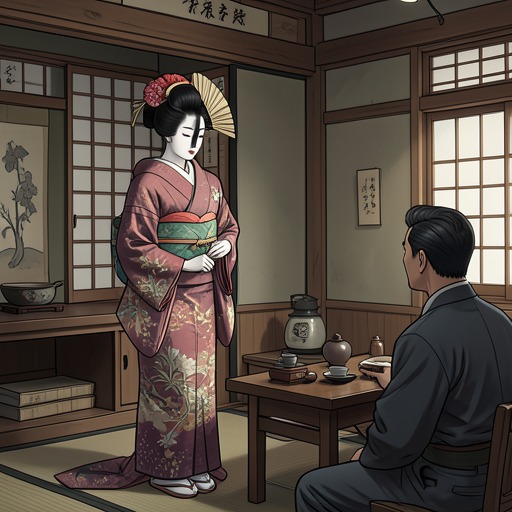
The system’s name recalled an older practice: a teahouse mistress lit a one-hour stick of incense whenever a geisha arrived to entertain, and the fee depended on how many sticks had burned by the time she left. The incense supplied a concrete measure of time spent at the party; the charge was not simply a flat payment for appearing. By the period described, the Gion Registry Office fixed the cost of one ohana. During the narrator’s apprenticeship, that rate was ¥3, approximately the price of two bottles of liquor.
The fixed unit did not mean that every geisha earned at the same rate. An unpopular performer might earn one ohana for an hour, while a sought-after geisha could command charges at far shorter intervals. Hatsumomo charged one ohana every fifteen minutes; Mameha charged one every five minutes, a rate that set her apart even among Gion’s leading geisha. The contrast made popularity economically legible: a prestigious performer could earn more for a brief visit than an unpopular one earned over a much longer engagement.
Earnings and the Work Behind Them
The nominal fee was not the geisha’s take-home income. The teahouse retained a portion, as did the geisha association and the dresser; other charges included a fee to an okiya for maintaining account books and tracking engagements. Even Mameha, despite her exceptional billing rate, kept only a little more than half of what she earned. The distinction between gross fees and retained income matters particularly at the lower end of the system: a geisha who earned only one ohana per hour might make no more than ¥10 in a busy night, insufficient even to repay her debts.
Popularity shaped whether engagements were available at all. An unpopular geisha might spend most evenings waiting near a charcoal brazier for work, while a prominent performer could be occupied throughout the night. The fee schedule therefore operated alongside a hierarchy of reputation and demand: the same unit of billing could produce sharply different livelihoods depending on how quickly a geisha was invited, how long she remained, and what rate her standing allowed her to charge.
The Apprentice’s Different Position
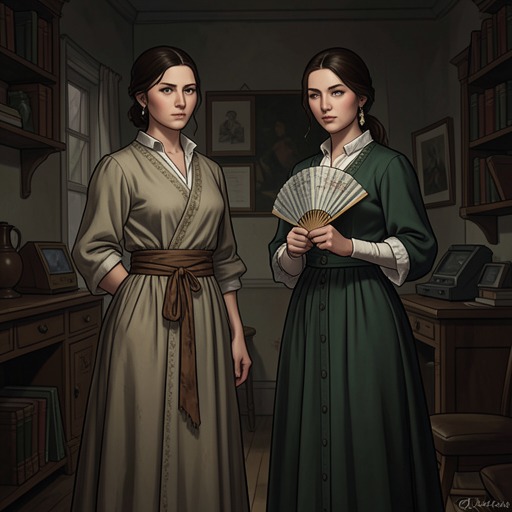
Apprentices followed different expectations from full-fledged geisha. Until the age of sixteen, an apprentice was billed at one-half ohana per hour. She was also expected to build relationships rather than make brief appearances: ordinarily she stayed at a party for an hour or longer, then contacted her okiya to learn where her older sister was and proceeded to another teahouse to meet a new group of guests. A popular older sister, by contrast, could drop into as many as twenty parties in an evening, sometimes staying only five minutes. An apprentice might attend no more than five.
That contrast made the billing arrangement vulnerable to manipulation. A popular geisha was welcome at many parties and could briefly greet customers who were willing to pay for the visit, trusting that she might spend longer with them on another occasion. Hatsumomo instead took her younger sister, Pumpkin, along on her rounds. Under the apprentice rate, a five-minute stay still brought a charge equivalent to a full hour at one-half ohana per hour. If Pumpkin appeared at several parties but left almost immediately, her earnings could seem unusually high—perhaps three or four ohana per hour—without reflecting the longer attendance expected of an apprentice.
Reputational Costs and Significance
The short visits could not be repeated without notice. Guests might accept Hatsumomo bringing Pumpkin briefly once or twice, but would eventually wonder why Hatsumomo was too busy to stay and why Pumpkin did not remain as expected. What looked like exceptional earnings could therefore be purchased at the cost of credibility. Mameha explained that Hatsumomo’s conduct showed desperation: the older sister was willing to make Pumpkin look successful, even though doing so risked the reputation of both women.
The Ohana (flower fees) billing system thus joined timekeeping to professional standing. Its fixed unit offered a common basis for charges, but it did not erase differences in rank, popularity, or opportunity. Instead, those differences shaped how a geisha could use time: an established performer might turn a five-minute greeting into a high-rate engagement, while an apprentice was supposed to stay, converse, and cultivate future connections. Pumpkin’s case exposes the tension between the countable fee and the less measurable reputation that made future work possible.